
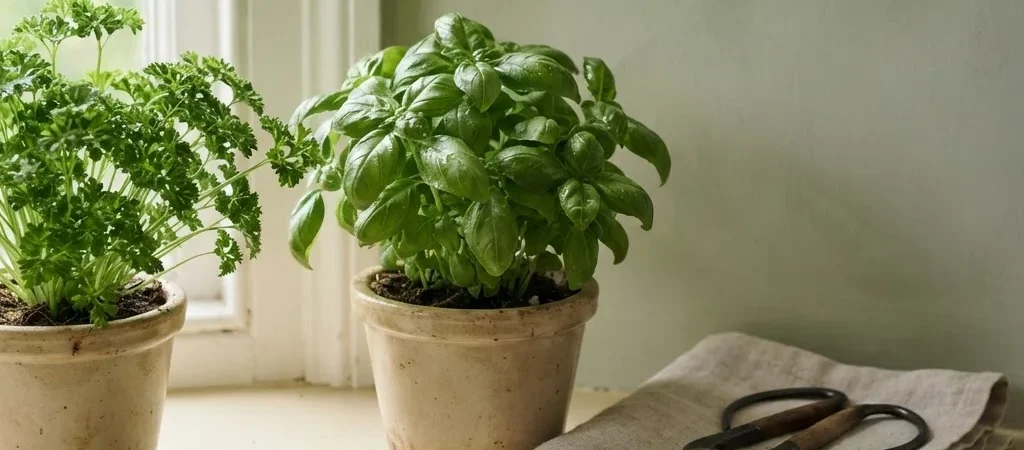
The basil that looked lush at the market may turn limp on a dim kitchen ledge. Before buying pots or seeds, watch how sunlight moves across your windowsill over a day. A small herb setup works best when it suits the window, your cooking, and the amount of attention you can give it.
Read the light first
A bright window with several hours of direct sun can suit herbs such as basil and thyme, while a cooler or less sunny spot may be a better fit for mint. Light changes with the season and can be blocked by nearby buildings or trees, so observe the actual sill rather than relying only on which direction the window faces. If the space stays dim, consider growing fewer plants instead of crowding several into poor conditions.
Choose a useful starter pair
Pick herbs you already use: basil for tomato dishes, parsley for soups, or mint for tea. One or two pots are easier to care for than a row of plants with different needs, and mint is often better kept in its own container because it can spread. A pot with drainage holes and a saucer is a practical starting point; decorative containers can be added once you know the setup works.
Water by checking the soil
Rather than watering on a fixed calendar, touch the soil and check whether it has begun to dry near the surface. Water slowly until excess drains into the saucer, then empty the saucer so the roots are not left sitting in water. Turning pots now and then can help plants grow more evenly when light comes from one side.
Harvest a little at a time
Snip a few leaves when you need them instead of stripping a small plant bare. Regular, modest harvesting gives you a reason to use the herbs while keeping the arrangement manageable. If we link to recommended planters or gardening tools, those affiliate links may earn Mahamystik a commission; we aim to explain what each item is useful for.

